Interventional Radiologist & Endovascular Surgeon — Trained at Mount Sinai & Columbia University / NYP, New York. Founder of Israel Vein Center and Senior IR at Shamir Medical Center.
Dr. Shimon Aronhime, MD — Interventional Radiologist & Endovascular Surgeon
📍 Lilienblum 17, Tel Aviv | Shamir Medical Center, Beer Yaakov
📞 073-374-4040 |
One of the most common complaints vein specialists hear: “My legs burn, ache, or throb at night — but feel fine in the morning.” If this sounds familiar, you are not alone, and the explanation is almost always circulatory.
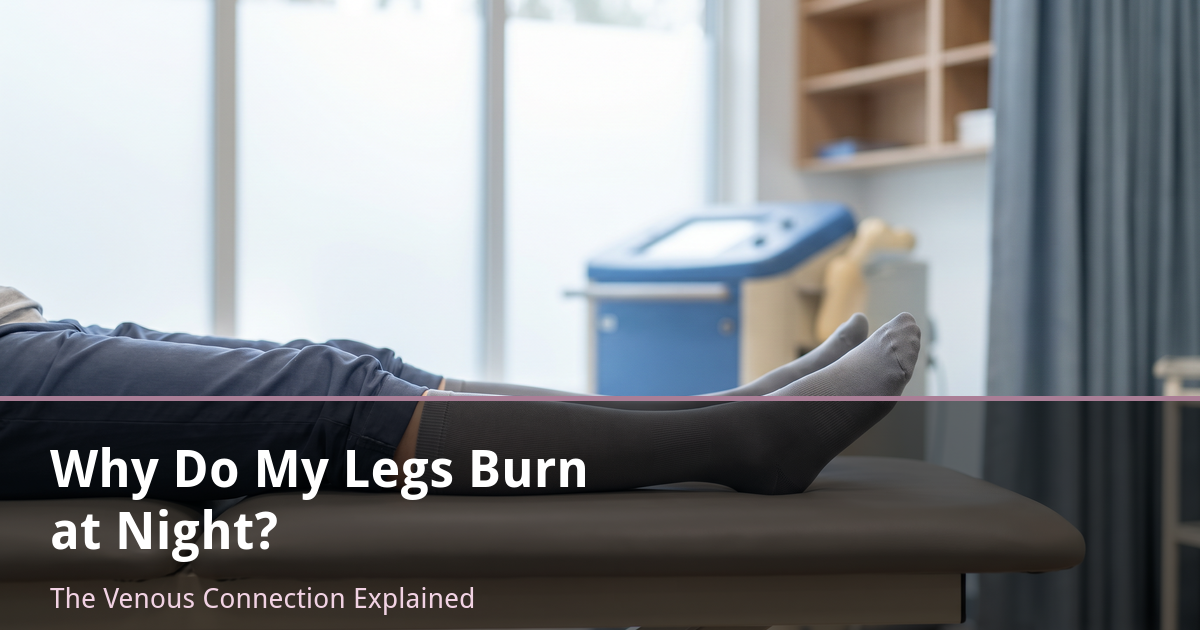
Why Do My Legs Burn at Night? The Venous Connection Explained
Why Do Veins Cause Nighttime Burning?
Throughout the day, standing and walking keep blood moving upward through your leg veins with the help of calf muscle contractions. But as soon as you lie down and the day’s activity stops, that mechanical pump is gone. If your venous valves are leaky — a condition called chronic venous insufficiency (CVI) — blood pools in the lower leg veins, raising pressure and triggering the characteristic burning, heaviness, and restless leg sensation.
The mechanism is well understood: elevated venous pressure causes fluid to leak into surrounding tissue, creating inflammation around nerve endings. This inflammatory process is most noticeable at night because:
- The muscle pump is inactive
- There is no gravity-assisted drainage when horizontal
- Vasodilation from warmth (bed warmth) worsens pooling
- Neurological awareness is heightened without daytime distractions
Other Conditions That Cause Burning Legs at Night
While venous insufficiency is the most common culprit, your doctor may also consider:
- Peripheral neuropathy (diabetes, alcohol, vitamin B12 deficiency)
- Restless leg syndrome (RLS) — an uncontrollable urge to move the legs
- Peripheral arterial disease — arterial narrowing causing ischemic pain
- Sciatica or nerve compression from lumbar disc problems
A vein specialist differentiates these using clinical examination and duplex ultrasound. The key distinguishing feature of venous pain: it worsens after prolonged standing or sitting and improves with leg elevation.
When to See a Vein Specialist
You should book a consultation if you experience:
- Burning, aching, or throbbing legs at night on more than 2 nights per week
- Visible varicose or spider veins alongside the symptoms
- Leg swelling that is worse by evening
- Skin discolouration or hardening around the ankle
- Restless or cramp-like sensations that disrupt sleep
Diagnosis — Duplex Ultrasound
At Israel Vein Center, the initial consultation includes a colour duplex ultrasound performed in the same visit. This painless scan visualises blood flow direction in real time, maps the location and severity of reflux, measures vein diameters, and categorises severity using the CEAP classification (C0–C6). The scan takes 20–30 minutes and produces a written report the same day.
Treatment Options for Venous Insufficiency
Treatment is matched to the findings on duplex ultrasound:
- EVLA (endovenous laser ablation) — thermal closure of the great or small saphenous vein; eligible for tofes 17 kupat holim funding at Shamir Medical Center
- RFA (radiofrequency ablation) — similar to EVLA using radiofrequency energy; performed privately
- VenaSeal — medical adhesive that seals the vein without heat or tumescent anaesthesia
- Ultrasound-guided sclerotherapy — chemical closure of smaller tributaries
- Compression therapy — first-line conservative measure before procedures
Further Reading
Ready to discuss your treatment options?
Frequently Asked Questions
Can venous insufficiency cause burning at night?
Yes. Chronic venous insufficiency is one of the most common causes of nighttime leg burning, heaviness, and restlessness. The sensation typically improves with leg elevation and worsens after prolonged standing.
How is venous insufficiency diagnosed?
With a colour duplex ultrasound that maps reflux, vein diameter, and CEAP severity. At Israel Vein Center this is included in the first consultation.
Will compression stockings help?
Compression stockings reduce venous pressure and often provide significant relief of symptoms, particularly at night. They are a first-line measure but do not treat the underlying reflux.
Is burning legs a sign of DVT?
DVT (deep vein thrombosis) typically presents with sudden calf pain, warmth, and swelling — not primarily burning at night. However, if symptoms are sudden and severe, seek immediate medical attention.
Can I treat venous insufficiency with lifestyle changes?
Lifestyle changes (regular walking, leg elevation, weight management) reduce symptoms but do not eliminate reflux. Definitive treatment requires an ablation or sclerotherapy procedure.
How long does EVLA recovery take?
Most patients return to light activities the same day. Full recovery including compression wear is typically 1–2 weeks. Long flights should be delayed by 2–3 weeks.
Is EVLA covered by kupat holim?
EVLA for clinically documented venous insufficiency at Shamir Medical Center is eligible for tofes 17 referral from all four major kupot holim.
Why do my thighs feel hot at night?
The same venous mechanism applies above the knee: blood that pooled in the leg veins through the day warms the tissues, and at night the skin vessels dilate to shed that heat — a sensation many people localize to the thighs or calves. If the heat is one-sided, or comes with swelling, redness or pain, get checked promptly.
Ready to Book a Consultation?
Duplex ultrasound mapping included at the first visit
Israel Vein Center — Lilienblum 17, Tel Aviv