Endovascular Surgeon & Interventional Radiologist — trained at Mount Sinai & Columbia University / NYP, New York. Founder of Israel Vein Center; Senior Attending, Shamir Medical Center.
What restless legs feel like — and where veins come in
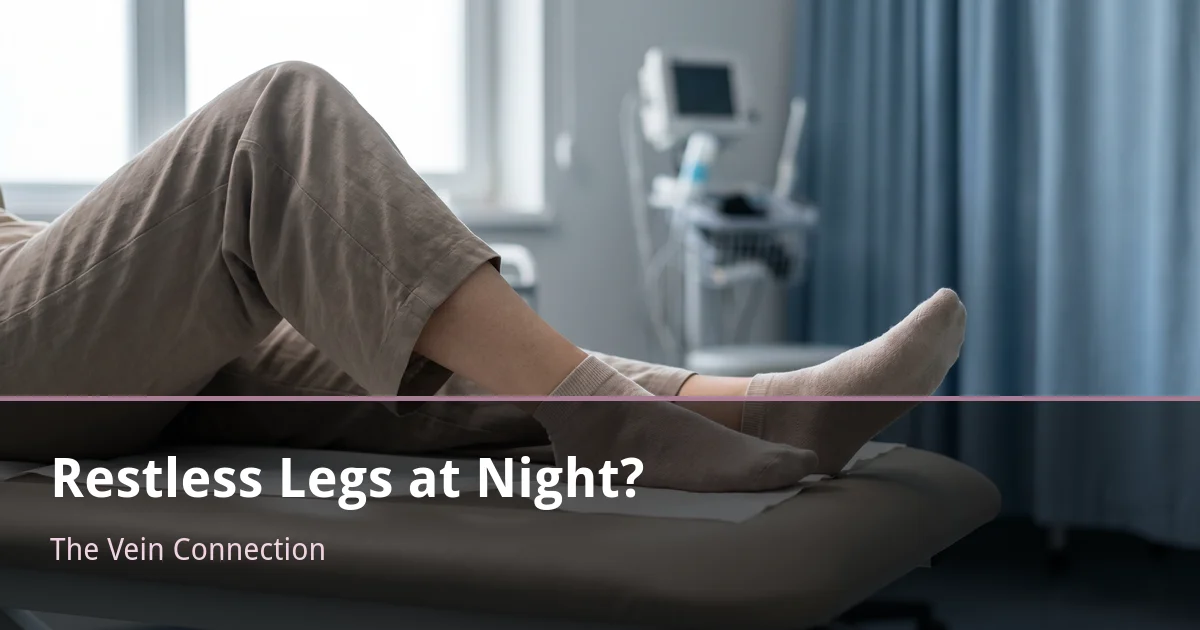
Classic restless legs syndrome (RLS) is an irresistible urge to move the legs, usually with crawling or tingling sensations, that starts in the evening, worsens when lying down and eases with movement. The overlap with vein disease is striking: venous insufficiency also produces aching, burning legs at night and a restless, cramping discomfort that peaks after a day of standing and is relieved by walking or elevating the legs. Because the timing and relief pattern are so similar, the two are frequently confused — and they can coexist.
The vein mechanism
When one-way valves inside the leg veins fail, blood refluxes downward and pools in the lower legs. Through the evening this pooling stretches the vein walls and irritates surrounding nerves, producing the deep, nagging urge to move. Movement squeezes the calf-muscle pump, briefly emptying the veins — which is exactly why walking brings relief. Studies estimate that up to 22–30% of patients with RLS-type symptoms have underlying venous insufficiency, and treating the reflux improved symptoms in a majority (Phlebology journal literature).
How we tell them apart
The key test is a venous duplex ultrasound — painless, done standing, and it maps exactly where blood is refluxing. Clues pointing toward a venous cause include heaviness, evening swelling, visible or bulging veins, skin changes at the ankle, and symptom relief with compression stockings. Clues favoring neurological RLS include symptoms in the arms, a strong family history, iron deficiency, and symptoms unrelated to standing.
Treatment options — and who to see
If the duplex shows reflux, treating it with modern outpatient methods (VenaSeal, laser ablation, radiofrequency or sclerotherapy) addresses the root cause; many patients report calmer legs within weeks. If the duplex is normal, a neurologist is the right address — classic RLS is managed with iron correction and specific medications. Often the practical path is simple: rule veins in or out first, because the scan is quick and definitive. If you also feel burning or heaviness, start with the vein workup.
Frequently asked questions
Does treating varicose veins help restless legs? When venous reflux is present, yes — most patients in published series reported meaningful improvement after treatment.
Should I see a neurologist or a vein specialist first? If you have any visible veins, swelling or heaviness, do the duplex first — it is fast and rules the venous cause in or out.
Book a duplex ultrasound evaluation →
Medically reviewed by Dr. Shimon Aronhime, MD, Interventional Radiologist and Endovascular Surgeon.
Israel Vein Center — Lilienblum 17, Tel Aviv · Shamir Medical Center, Beer Yaakov · 073-3744040
Dr. Shimon Aronhime, MD — Endovascular Surgeon
📍 Lilienblum 17, Tel Aviv | Shamir Medical Center, Beer Yaakov
📞 073-374-4040 | WhatsApp
Ready to Book a Consultation?
Duplex ultrasound mapping included at the first visit
Israel Vein Center — Lilienblum 17, Tel Aviv